Brookshire, TX 77423·46,000 sq ft in stock·Ships 1–15 business days
sarielhu7@gmail.com·+1-346-827-6702
USFlexDuct

Insulated Ducts

Energy-efficient insulated flexible ducts designed to minimize heat loss and condensation in HVAC ductwork. Available in R4.2, R6, and R8 insulation grades with optional soundproofing.

R4.2 / R6 / R8 insulation valuesFiberglass & polyester wool optionsVapor barrier outer jacketSoundproof models availableEnergy code compliantCondensation prevention

Available Models (4)

Fiberglass Insulated Flex Duct

Fiberglass Insulated Flex Duct

Standard fiberglass wool insulated flexible duct with aluminum foil inner core and metalized polyester vapor barrier. 25mm (1") fiberglass insulation at 16 kg/m³ density. Industry standard for residential HVAC.
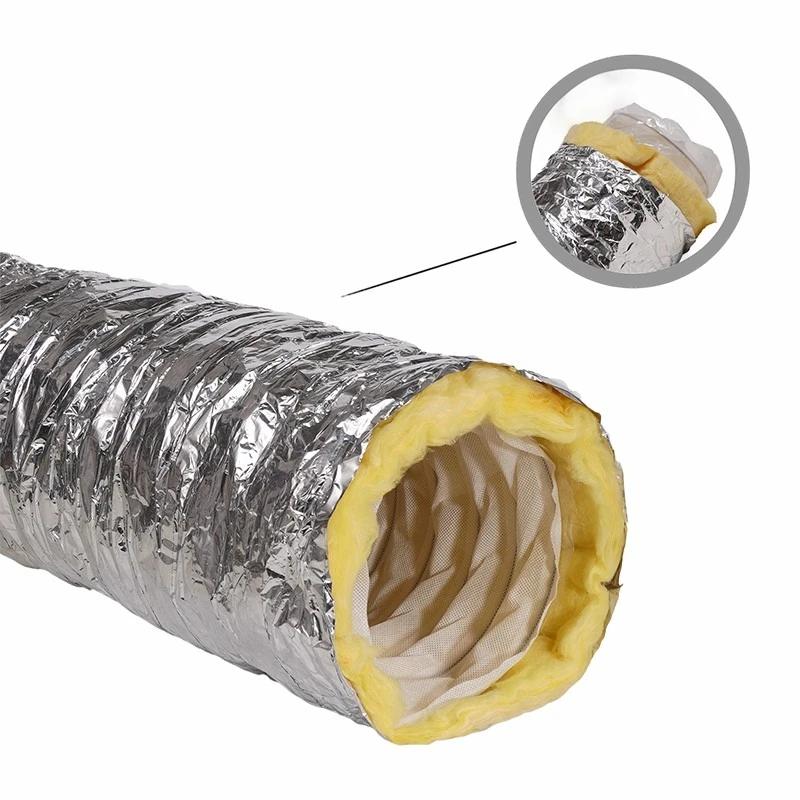
Inner DuctAluminum foil + steel wire helix
InsulationFiberglass wool, 16 kg/m³
Insulation Thickness25mm (1")
Polyester Insulated Flex Duct

Polyester Insulated Flex Duct

Polyester wool insulated flexible duct — a fiberglass-free alternative. Non-irritant polyester insulation at 200 g/m² density. Ideal for environments where fiberglass particles are a concern.
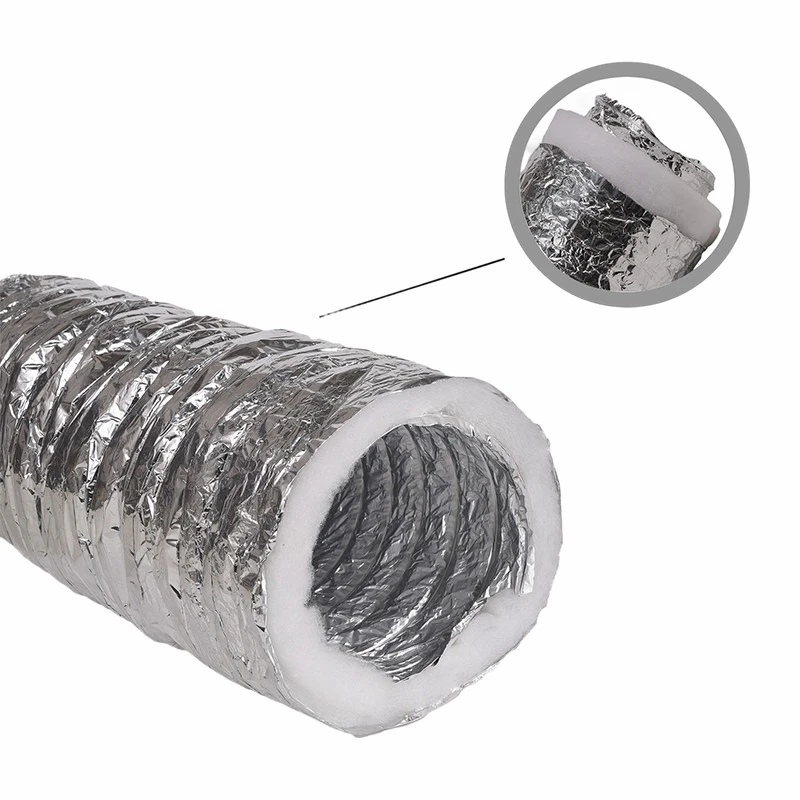
Inner DuctAluminum foil + steel wire helix
InsulationPolyester wool, 200 g/m²
Insulation Thickness25mm (1")
R6 / R8 Insulated Flex Duct

R6 / R8 Insulated Flex Duct

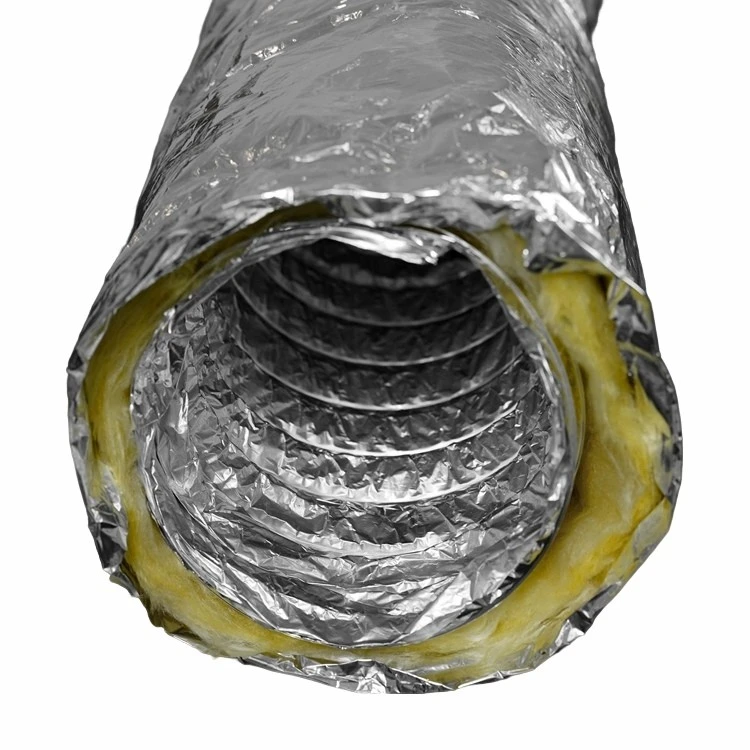
High-performance insulated flexible ducts rated R6 (40mm) and R8 (80mm). Designed for energy code compliance in attics, crawl spaces, and unconditioned areas where maximum thermal performance is required.
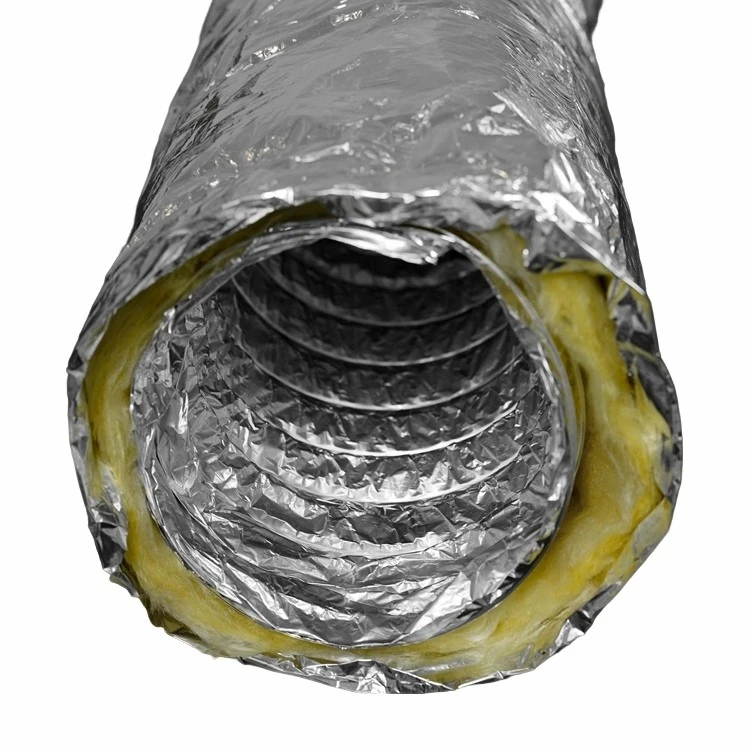
Inner DuctAluminum foil + steel wire helix
InsulationFiberglass wool, 16 kg/m³
R6 Thickness40mm (1.6")
Soundproof Insulated Duct (Acoustic Duct Insulation)

Soundproof Insulated Duct (Acoustic Duct Insulation)

Acoustically lined insulated flexible duct with acoustic duct insulation and non-woven fabric inner core for superior noise reduction. Reduces HVAC system noise by up to 25 dB. Also serves as insulated exhaust duct for quiet ventilation. Perfect for bedrooms, offices, and recording studios.

Inner CoreNon-woven acoustic fabric + steel wire
InsulationFiberglass wool, 16 kg/m³
Insulation Thickness25mm (1")
In Stock — Ships 1–15 Days
UL 181 Class 1 Standard
30 Years in HVAC Duct
Houston, TX — 46,000 sq ft
FTL / LTL Freight Available

Request a quick quote

Fill in your requirements. We respond within 24 hours on business days.

Response within 24h · sarielhu7@gmail.com

Frequently Asked Questions

What R-value duct insulation do I need?
The R-value you need depends on your climate zone and local energy code. In warm climates (IECC zones 1–3, including Houston, TX and the southern US), R4.2 or R6 insulated flex duct is typically sufficient. In cold climates (zones 4–8), R8 insulated duct is usually required by code, especially for ductwork in unconditioned attics or crawl spaces. R6 provides 40mm (1.6") of insulation, while R8 provides 80mm (3.1"). See our detailed comparison in the R6 vs R8 duct insulation guide.
R6 vs R8 insulated duct — which is better?
R8 insulated duct provides nearly double the thermal resistance of R6 (80mm vs 40mm insulation), reducing energy loss by up to 25% more. However, R8 duct has a larger outer diameter, which can be an issue in tight spaces. If your ductwork runs through conditioned spaces (inside walls, below insulated ceilings), R6 is usually adequate. For attics, crawl spaces, garages, or any unconditioned space, R8 is the better investment — the energy savings typically pay back the extra cost within 1–2 years. Our R6 vs R8 comparison guide breaks down the cost-benefit analysis.
Does insulated flexible duct prevent condensation?
Yes — properly installed insulated flex duct with an intact vapor barrier prevents condensation (sweating) on the duct exterior. Condensation occurs when warm, humid air contacts a cold duct surface. Insulation keeps the outer jacket temperature above the dew point. Our insulated ducts feature a metalized polyester vapor barrier that blocks moisture migration. For maximum condensation prevention in humid climates, use R6 or R8 insulated duct and seal all joints with UL-listed foil tape. Read more in our duct insulation guide.
What is the difference between fiberglass and polyester insulated duct?
Fiberglass wool insulated duct (16 kg/m³ density) is the industry standard — it delivers excellent thermal and acoustic performance at a competitive cost. Polyester wool insulated duct (200 g/m²) is fiberglass-free, non-irritant, and non-allergenic, making it ideal for hospitals, schools, clean rooms, and any environment where airborne fiberglass particles are a concern. Both options are available with vapor barrier outer jackets. Thermal performance is comparable at the same thickness. Learn more about insulation materials in our duct liner vs wrap guide.
Can insulated duct reduce HVAC noise?
Standard insulated flex duct provides moderate noise reduction (5–10 dB) thanks to the fiberglass or polyester wool layer. For spaces where noise is critical — bedrooms, home offices, recording studios — our soundproof insulated duct with acoustic duct insulation and a non-woven fabric inner liner delivers up to 25 dB of noise reduction. The acoustic liner dampens turbulence noise at the air contact surface, while the insulation absorbs structure-borne sound. This is a far more effective solution than adding external duct wrap.
WhatsAppGet a Quote